
Yes! Magazine: Can California’s Cap and Trade Actually Address Environmental Justice?
Since California’s program launched in 2013, questions have swirled about whether cap and trade has helped or hurt people living in the shadow of the state’s largest emitters.
By Julia Rosen
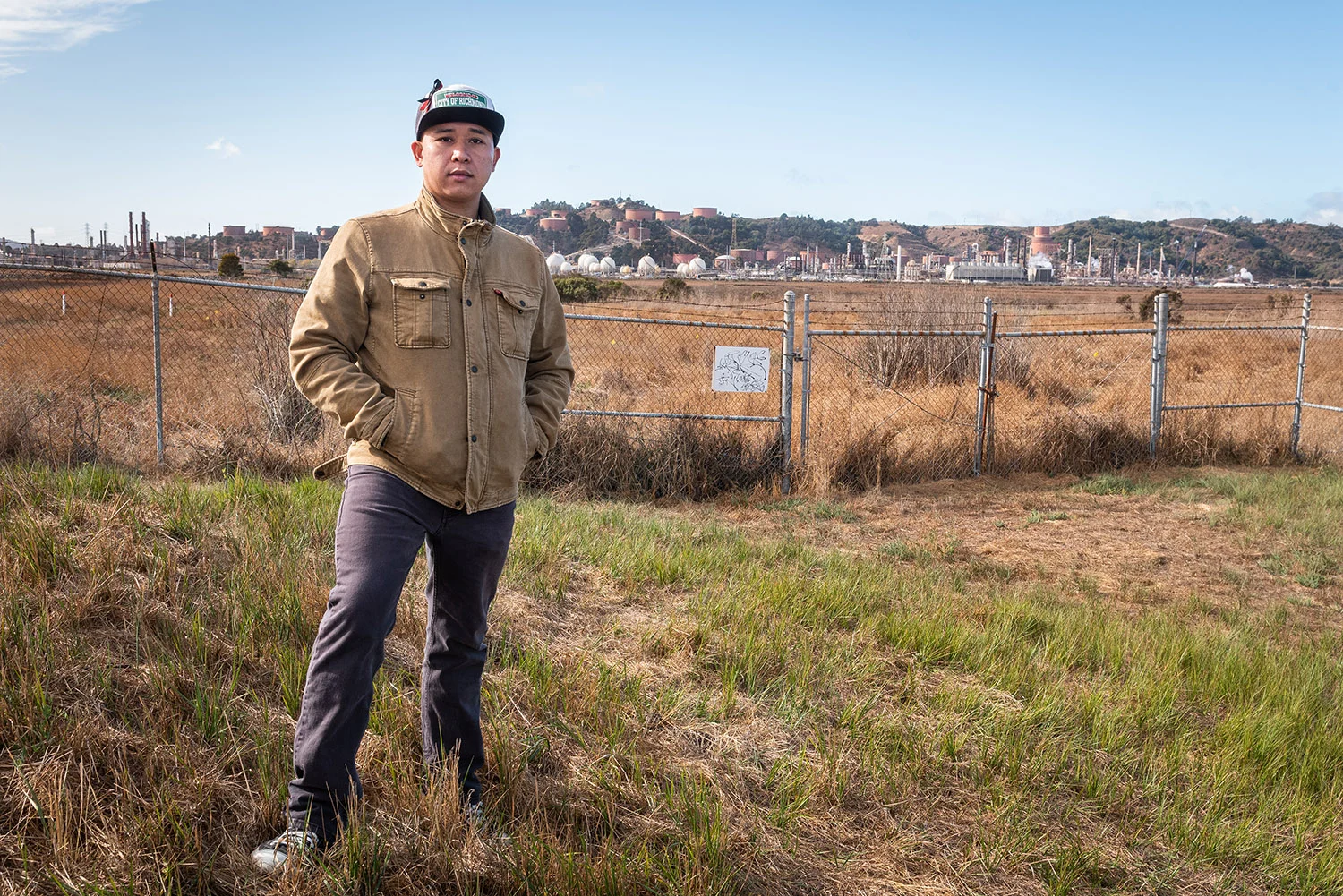
Growing up in North Richmond, California, Denny Khamphanthong didn’t think much of the siren that wailed once a month, every first Wednesday at 11 a.m. The alarm is a test of the community’s emergency warning system, which has alerted residents to numerous incidents over the years at the nearby Chevron oil refinery. One accident there—a 2012 fire—sent a cloud of black smoke billowing over San Francisco Bay and left thousands of local residents struggling to breathe.
Now, when Khamphanthong explains the sound to his young nieces, he sees the fear in their eyes. “I forget that this isn’t normal,” he says. Nor is the fact that Khamphanthong and most of his childhood friends carried inhalers. Richmond, a diverse, industrial city where housing prices and incomes have lagged behind its Bay Area neighbors, has poor air quality and some of the highest rates of respiratory and cardiovascular disease in California.
“There’s a lot of beautiful things that happen out of [Richmond],” says Khamphanthong, a community organizer with the Asian Pacific Environmental Network whose family emigrated from Laos in the 1980s. “But at the same time, when you look at the reality of it, it is sad.

Pollution, poverty, and race collide in many other disadvantaged communities across California—and the country—and some argue that the state’s climate policies haven’t helped. While California has already cut its greenhouse gas emissions by 13% since their peak in 2004, many residents still suffer from high levels of air pollution—much of it produced by fossil fuels.
In particular, controversy has dogged California’s cap-and-trade policy, which took effect in 2013 and regulates roughly 450 entities accounting for 85% of California’s emissions. The system works by setting a limit on the total amount of greenhouse gases released by refineries, power plants, and other large emitters, and requires polluters to obtain permits to cover their share. The overall “cap” lowers every year, forcing polluters to reduce their emissions or purchase allowances from others who do.
Economists, environmentalists, and policymakers—many of them White—tout cap and trade as a cost-effective way to cut emissions while generating money for other climate initiatives. But environmental justice activists say the program has not served California’s disadvantaged communities, and particularly communities of color, where many facilities operate. In their eyes, it doesn’t do enough to address climate change and allows emitters to continue polluting the air in the meantime.

A hawk at Wildcat Marsh Staging Area, located next to the Chevron Richmond Refinery in Richmond, California. Photo by Federica Armstrong/YES! Magazine.
For example, state records suggest that the Chevron Richmond Refinery, one of California’s largest emitters, released more greenhouse gases in 2017 and 2018—the last years for which data are publicly available—than it has since 2008. And in several recent years, it emitted as much or more of certain air pollutants. It has also dramatically increased the volume of gas flared off as waste—another source of harmful compounds. (Representatives from Chevron said that flaring was related to a new hydrogen plant coming online, and that the refinery has made significant investments in reducing emissions of air pollutants over the past 40 years.)
To many, cap and trade highlights a contradiction. “You’re hearing all this great stuff about how amazing your governor and your state is on climate leadership,” says Lucas Zucker, policy and communications director at the Central Coast Alliance United for a Sustainable Economy. But “it doesn’t feel like anything is changing.”
